
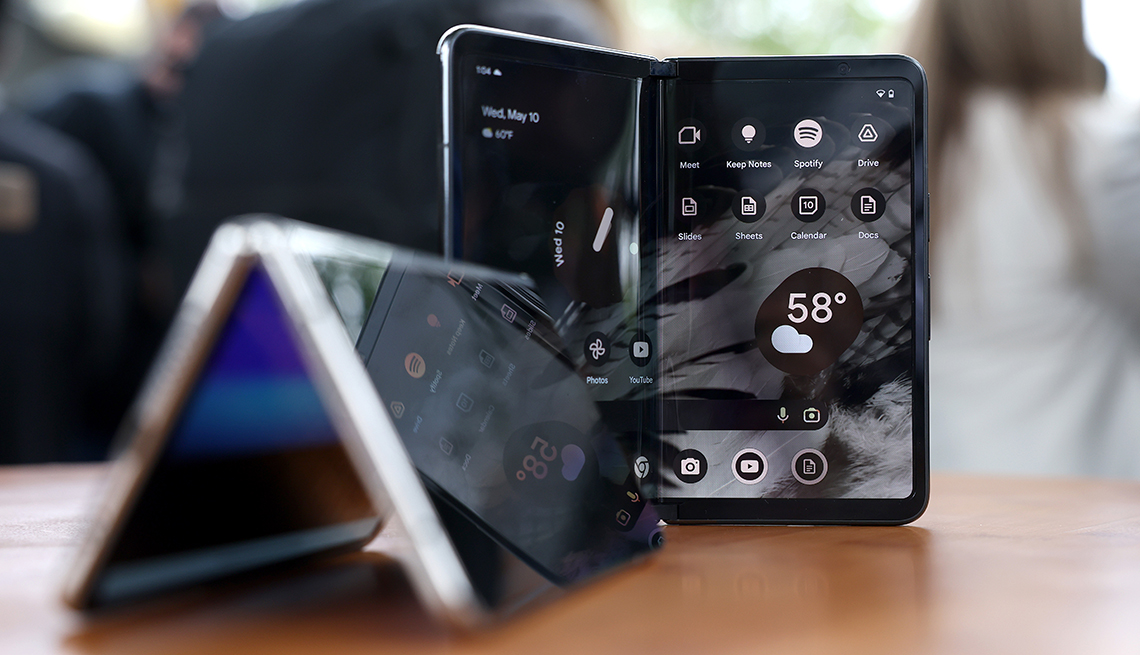
The Foldable Phone Market Enters a New Phase
Foldable smartphones have moved from futuristic concepts to recognizable products in the American consumer electronics market. Their ability to transform from a compact phone into a larger display has attracted technology enthusiasts, mobile professionals, and consumers who want more flexibility from a single device. Yet as the category matures, the excitement surrounding innovative designs is being accompanied by a more practical question: Can foldable phones deliver the durability and battery life that everyday users expect?
For many Americans, a smartphone is much more than a communication tool. It serves as a camera, navigation system, mobile office, entertainment center, digital wallet, and personal assistant. A device that looks impressive in a store must also survive long commutes, busy workdays, frequent app switching, and years of regular use.
This is where foldable phones face their biggest test. Manufacturers must balance thin designs, increasingly sophisticated displays, powerful processors, and dependable power management. Consumers, meanwhile, are becoming more selective about which premium features justify a higher purchase price.
The next stage of the foldable phone market will depend not only on how dramatically a device opens, but also on how reliably it performs after months or years in someone’s pocket.
Why Americans Are Taking a Closer Look at Foldable Phones
The appeal of a foldable smartphone is easy to understand. Traditional smartphones offer increasingly large displays, but their dimensions are limited by the need to fit comfortably in one hand or pocket. Foldable designs approach this challenge differently, allowing users to carry a relatively compact device that can expand when additional screen space becomes useful.
For professionals, a larger internal display can make reviewing documents, comparing spreadsheets, and participating in video meetings more convenient. Students may appreciate the ability to read digital textbooks while taking notes. Travelers can use a larger screen to examine maps, manage bookings, and organize photographs without constantly switching between applications.
Entertainment is another important attraction. Watching videos, reading digital magazines, and playing mobile games can feel more immersive on a display that unfolds into a tablet-like surface.
However, these benefits must be weighed against familiar concerns. Foldable devices can cost substantially more than conventional smartphones with comparable processing power. Their mechanical hinges introduce additional engineering complexity, while flexible displays require specialized materials and construction.
American buyers are therefore increasingly likely to evaluate foldable phones as long-term purchases rather than novelty gadgets. A clever design may capture attention, but dependable everyday performance is what ultimately earns customer loyalty.
The Durability Challenge Behind Flexible Displays
A conventional smartphone is already expected to withstand a demanding environment. It may be dropped onto a kitchen floor, squeezed into a crowded backpack, exposed to dust, or used outdoors during unpredictable weather. Foldable phones face these challenges while incorporating a display and hinge system that must accommodate repeated movement.
Every opening and closing cycle places demands on the hinge mechanism and flexible screen. Manufacturers must carefully manage alignment, material fatigue, surface protection, and the distribution of mechanical stress. Even small improvements in these areas can influence how confident consumers feel about using a foldable device every day.
The crease running through a foldable display remains another consideration. Depending on the model, lighting conditions, viewing angle, and the user’s sensitivity to visual imperfections, the crease may be barely noticeable or distracting.
Dust and moisture protection also deserve attention. Some foldable models offer meaningful resistance to water and dust, but protection varies by product. Buyers should check the precise rating and limitations of the model they are considering rather than assuming that every foldable phone offers the same level of protection as a traditional flagship.
Repair costs can be equally important. A damaged flexible display or specialized hinge may require more expensive repairs than a conventional screen. Consumers who plan to keep their phones for several years should investigate warranty coverage, accidental-damage protection, and the availability of authorized repair services before purchasing.
Durability is not simply a technical specification. It affects whether consumers feel comfortable opening their devices hundreds of times a week without worrying about an unexpected repair bill.
Battery Life Becomes More Important on Larger Screens
A larger display can make a foldable phone more useful, but it can also increase energy demands. High screen brightness, demanding applications, mobile gaming, video calls, and background synchronization all contribute to power consumption. When users unfold their phones frequently, the relationship between screen size and battery efficiency becomes especially important.
Manufacturers must fit sufficient energy capacity into a chassis that remains comfortable to carry. This creates a difficult engineering trade-off: increasing capacity can improve endurance, but additional battery volume and weight may conflict with the goal of creating a thinner device.
The challenge becomes more complicated when powerful processors and advanced displays are added to the design. Efficient chips, adaptive refresh rates, intelligent brightness controls, and software optimization can help reduce unnecessary power consumption without sacrificing the experience consumers expect.
For shoppers comparing devices, the advertised capacity alone does not tell the entire story. Two smartphones with similar battery specifications may deliver different real-world results because of their displays, software, network conditions, and thermal management.
A well-designed smartphone battery should support the way a person actually uses the device, whether that means attending back-to-back meetings, navigating unfamiliar streets, streaming entertainment during a flight, or taking photographs throughout a weekend trip.
Independent battery tests and reviews can provide a more useful picture than capacity figures alone. Consumers should look for testing that reflects everyday activities and pay attention to whether results were measured with the device folded, unfolded, or used in a mixture of both configurations.
Charging Speed Is Only Part of the Solution
Fast charging has become an important selling point across the smartphone industry. For people with demanding schedules, the ability to recover a meaningful amount of power during a short break can be extremely convenient.
Foldable phones, however, need a balanced approach to charging. A high charging rate is useful only when the device can manage heat effectively and maintain dependable performance over time. Battery temperature, charging accessories, software controls, and the manufacturer’s charging strategy can all influence the experience.
Wireless charging may offer additional convenience, particularly for users who already have compatible charging stands at home or in the office. Nevertheless, wireless charging efficiency and heat generation vary according to the charger, alignment, and device design.
Consumers should also consider their daily routines. Someone who regularly works near a desk may be comfortable with moderate endurance and convenient charging access. A frequent traveler, outdoor worker, or delivery driver may place greater value on long battery life and the ability to recharge quickly between tasks.
The best solution is not necessarily the phone with the highest advertised charging speed. It is the device that combines sufficient capacity, efficient software, appropriate thermal management, and charging options that fit the user’s lifestyle.
Software Optimization Can Make or Break the Experience
Hardware determines many of a foldable phone’s capabilities, but software determines how naturally those capabilities fit into everyday life.
Applications need to adapt when the device changes from a narrow outer display to a larger internal screen. A well-optimized app should preserve the user’s progress, reposition controls intelligently, and take advantage of the extra space without forcing unnecessary adjustments.
Multitasking is particularly important. Users may want to keep a video call open while reviewing a document, respond to messages while checking a calendar, or compare information across two applications. When these interactions are smooth, the foldable form factor feels genuinely useful rather than merely different.
Software also plays a significant role in power efficiency. Background processes, excessive notifications, poorly optimized applications, and unnecessary synchronization can drain energy even when the screen is not being used heavily.
Adaptive display settings and battery-management features can help reduce consumption. Some systems also provide usage statistics that identify applications responsible for unusually high power demands.
A dependable smartphone battery experience therefore depends on cooperation between hardware and software. A larger physical capacity cannot fully compensate for inefficient applications, just as sophisticated power-saving software cannot overcome every limitation of an undersized battery.
Manufacturers that provide consistent operating-system updates and meaningful performance improvements may have an advantage with buyers who expect to keep an expensive foldable phone for several years.
The Hidden Trade-Off Between Thinness and Practicality
Slimmer designs are attractive because they make large-screen devices easier to carry. They also allow manufacturers to create products that look refined and feel more comfortable in a pocket.
Yet thinness comes with engineering constraints. Space inside a foldable phone is shared by the display assembly, hinge, cameras, speakers, circuit boards, cooling components, and battery. Reducing the thickness of one component may require changes elsewhere in the design.
This is particularly relevant to battery capacity. A manufacturer seeking to create an exceptionally thin foldable phone must decide how much internal space to devote to energy storage without making the device too heavy or compromising its structural integrity.
There is no universally correct balance. Some buyers prefer the lightest possible device, even if they need to recharge more often. Others would accept a slightly thicker phone in exchange for longer endurance and greater confidence during a full day away from a charger.
Camera performance creates another trade-off. Larger sensors and sophisticated camera systems can improve photography, but they also compete for internal space. Manufacturers must decide whether to prioritize imaging, battery capacity, thinness, or a carefully balanced combination.
For consumers, these compromises make hands-on testing and detailed reviews especially valuable. A specification sheet can describe dimensions and capacity, but it cannot fully communicate how comfortable a phone feels after hours of use or how well it fits into an individual routine.
What Buyers Should Check Before Purchasing
Anyone considering a foldable smartphone should evaluate more than its display size or promotional price. A few practical checks can help avoid disappointment.
First, examine the hinge and display design. Read independent reviews that discuss long-term reliability, screen protection, crease visibility, and the manufacturer’s repair policies. Water resistance should be assessed according to the exact model’s specifications.
Second, investigate battery performance under realistic conditions. Look for tests involving video streaming, navigation, mobile data, camera use, and multitasking. If possible, compare results from reviewers who use similar screen settings and network conditions.
Third, consider the total cost of ownership. A foldable phone’s purchase price is only one part of the expense. Cases, insurance, accidental-damage coverage, and potential repairs may affect its long-term value. Trade-in offers and software-support commitments can also influence the decision.
Fourth, test the applications that matter most. People who depend on particular productivity tools, banking applications, video services, or games should confirm that these programs work properly on both displays.
Finally, think honestly about usage habits. Someone who primarily sends messages, browses websites, and takes occasional photographs may not benefit enough from a foldable design to justify the additional cost. A professional who frequently reviews documents or manages several applications at once may find the larger screen much more valuable.
A smartphone battery should also be evaluated in the context of these habits. The right device is one that delivers adequate endurance for a normal day without requiring users to constantly monitor the remaining percentage.
Competition Will Depend on More Than Innovation
Competition in the foldable market is likely to extend beyond display technology. Manufacturers must differentiate their products through reliability, software support, camera quality, service availability, and overall value.
Established smartphone brands have an advantage when they can draw on existing customer relationships, retail networks, and repair infrastructure. At the same time, competition encourages companies to improve materials, refine hinge mechanisms, and explore more efficient internal designs.
The broader smartphone market also sets a high standard. Conventional flagship phones offer excellent cameras, bright displays, fast processors, and increasingly sophisticated AI features. Foldable devices must provide enough additional value to persuade buyers to accept higher prices or different durability considerations.
Artificial intelligence could make larger screens more useful by improving document summaries, image editing, translation, and multitasking. However, AI features can introduce additional processing demands, and their impact on energy consumption depends on whether tasks run locally, in the cloud, or through a combination of both.
The most successful devices will likely be those that make these technologies feel effortless. Consumers do not necessarily want more features simply for the sake of novelty. They want useful features that work reliably, preserve privacy, and do not leave them searching for a charger halfway through the afternoon.
The Future of Foldable Phones in America
Foldable smartphones represent a meaningful attempt to rethink the shape of a device that billions of people use every day. Their expanding displays offer real advantages for productivity, entertainment, and mobile creativity. But the category’s long-term success depends on solving practical problems that become more noticeable with everyday use.
Durability must improve without making devices bulky. Battery life must remain competitive despite demanding displays and increasingly capable processors. Software must adapt naturally to changing screen configurations, while repair services and warranty policies need to give consumers confidence in their investment.
American buyers are unlikely to judge future foldable phones solely by how impressive they look during a product launch. They will judge them by whether the hinge remains dependable, the screen stays comfortable to use, applications behave consistently, and the device lasts through a busy day.
For manufacturers, this creates a clear opportunity. The next major breakthrough may not be a radically different folding mechanism or an even thinner chassis. It may be a more balanced device that combines attractive design with dependable performance and practical ownership costs.
For shoppers, patience and careful comparison remain sensible strategies. Foldable technology continues to evolve, and the right purchase depends on individual needs, budget, and willingness to accept the trade-offs.
Ultimately, the future of foldable phones will be determined by a simple principle: innovation matters most when it improves everyday life. A device that combines a flexible display, durable construction, intelligent software, and reliable power management has a stronger chance of becoming an everyday essential rather than an expensive experiment.
