
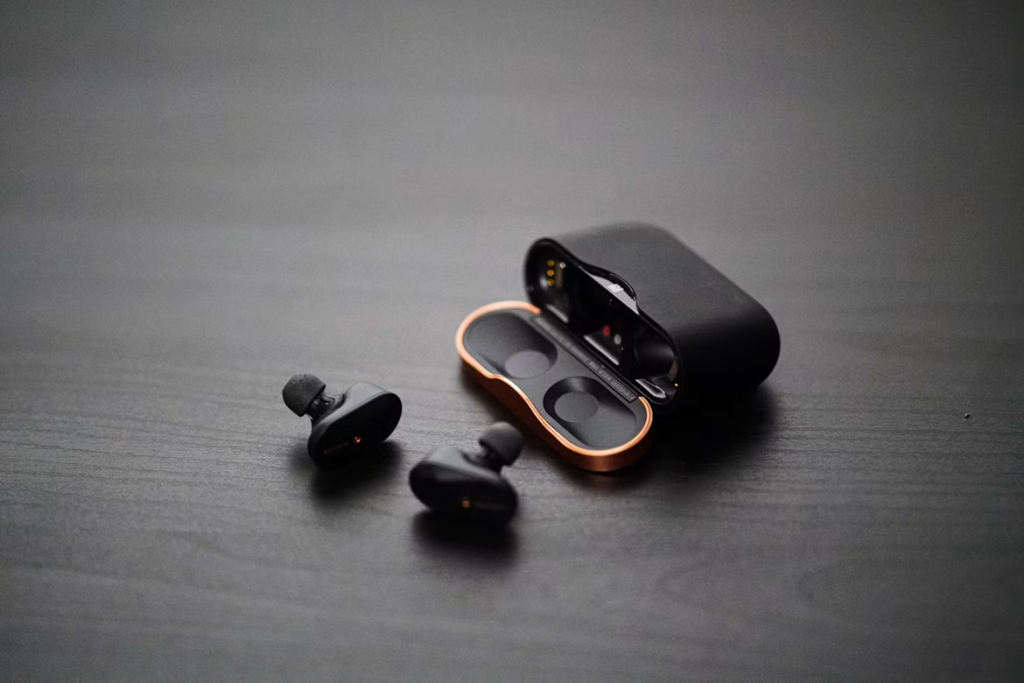
Wireless headphones have become one of the most ordinary pieces of technology in American life. People wear them while commuting, working, exercising, shopping, traveling, studying, and relaxing at home. Yet in 2026, the familiar experience of putting on a pair of wireless earbuds is changing quickly.
The latest generation of headphones is no longer focused only on delivering music without a cable. Manufacturers are increasingly combining artificial intelligence, active noise cancellation, real-time translation, voice assistants, health-related functions, and improved wireless connectivity into increasingly compact devices. These developments are helping transform wireless headphones from simple audio accessories into intelligent everyday technology.
This raises an interesting question for American consumers: Are wireless earbuds becoming smarter than ever, and what does that actually mean for everyday listening?
From Simple Music Players to Everyday Digital Assistants
A few years ago, most consumers expected wireless earbuds to perform a relatively simple job: connect to a smartphone and play audio.
Today, that expectation has changed.
Modern wireless headphones can automatically adjust noise cancellation, respond to voice commands, switch between devices, enhance voices during calls, and interact with AI assistants. Some emerging products are even designed around real-time language translation, allowing users to communicate across language barriers without constantly looking at a smartphone.
The shift is part of a broader movement in consumer technology. Instead of creating separate devices for every task, manufacturers are trying to make existing devices more intelligent. A pair of headphones can now become a microphone, translator, communication tool, entertainment system, and personal assistant at the same time.
That makes headphones particularly interesting because they are already worn close to the user. Unlike a smartphone, which requires users to look at a screen, headphones can provide information while people are walking, exercising, driving, or working.
AI Is Changing What Headphones Can Do
Artificial intelligence is becoming one of the most important additions to wireless audio.
Instead of simply processing an audio signal, newer headphones can use software to understand the surrounding environment and respond accordingly. For example, AI-powered noise processing can distinguish between background traffic, conversations, music, and other sounds.
This direction is becoming increasingly visible in the latest wireless earbuds. AI assistants can respond to spoken questions, help users manage information, and perform certain tasks without requiring them to touch their phones.
For American users, these features could make headphones more useful in everyday situations.
Imagine walking through a busy airport. Instead of opening a phone to change the volume, check a notification, or translate a conversation, a user could potentially accomplish those tasks through voice interaction.
That is a significant change in how people think about wearable technology.
Real-Time Translation Could Become a Major Feature
Language translation is another area attracting attention.
AI translation earbuds have become increasingly visible in the U.S. technology market, particularly for travelers and people who communicate across multiple languages. The concept is simple: instead of constantly looking at a smartphone during a conversation, users can hear translated speech directly through their headphones.
The appeal is easy to understand.
Traditional translation apps require users to take out their phones, open an application, select languages, speak into the microphone, and then read or listen to the result. Headphones could potentially make the process much more natural.
A traveler could walk through a foreign city while receiving translated speech directly through the earbuds. A business traveler could participate in a conversation without repeatedly passing a phone back and forth. Even casual conversations could become easier.
Of course, translation technology is not perfect. Accents, background noise, slang, cultural references, and poor internet connections can all create problems. But the technology is moving toward a more seamless experience where translation happens in the background rather than being treated as a separate task.
Noise Cancellation Is Becoming More Intelligent
Active noise cancellation, or ANC, is not new. However, the technology is becoming more sophisticated.
Earlier generations of noise-canceling headphones often offered a simple choice: noise cancellation on or off. Newer models increasingly attempt to adjust the experience dynamically.
This matters because real-world environments are rarely consistent.
A person might be sitting quietly at home one minute and walking beside a busy street the next. On an airplane, the background noise can remain relatively consistent, while a coffee shop contains constantly changing voices and sounds.
Modern ANC systems can use microphones and software to respond to these changing environments. The goal is no longer simply to block everything.
Instead, manufacturers are trying to create a more intelligent balance between isolation and awareness.
For example, a user might want strong noise cancellation during a flight but prefer a transparency mode when walking around a city. Intelligent headphones can increasingly make these adjustments easier and more automatic.
Battery Life Still Matters More Than AI
As headphones become smarter, one problem becomes increasingly important: power consumption.
AI processing, active noise cancellation, Bluetooth connectivity, microphones, touch controls, and other intelligent features all require energy. Consumers may love having more features, but they still expect their headphones to work throughout a long day.
This is why headphones battery performance remains one of the most important considerations when evaluating wireless audio products.
A pair of headphones with impressive AI functions is not particularly useful if it needs to be charged several times during the day. For commuters, travelers, students, and office workers, reliable battery life can matter just as much as sound quality.
This creates an interesting engineering challenge: companies need to add more intelligence without dramatically increasing power consumption.
Better processors, improved wireless standards, optimized software, and more efficient power management can all help manufacturers achieve that balance.
The Charging Case Is Becoming More Important
For true wireless earbuds, consumers are not only buying two tiny speakers. They are also buying a charging system.
The case protects the earbuds, stores them when they are not being used, and provides additional power throughout the day. This means the overall battery experience depends on both the earbuds and the case.
For frequent travelers, this can make a major difference.
Someone taking a long flight may not have easy access to an outlet. A commuter may spend hours away from home. A fitness enthusiast may use earbuds during multiple workouts before returning to a charger.
Consequently, a reliable headphones battery system has become an essential part of the product experience rather than a technical detail hidden inside the specifications.
Manufacturers are also experimenting with faster charging, wireless charging, improved power management, and software features designed to reduce unnecessary energy consumption.
For consumers, this means that battery specifications are becoming increasingly important when comparing different wireless headphone models.
Open-Ear Headphones Are Challenging the Traditional Design
Not everyone wants complete isolation.
Open-ear headphones have become an increasingly interesting alternative because they allow users to listen to audio while remaining aware of their surroundings. This can be especially attractive to runners, cyclists, commuters, and people working in shared environments.
The appeal is straightforward.
A runner may want to hear music but still remain aware of nearby vehicles. An office worker may want background audio without completely disconnecting from coworkers. A parent may want entertainment while remaining aware of what is happening around them.
This shows that the future of headphones may not be dominated by a single design.
Instead, consumers may increasingly choose different types of wireless audio devices based on specific situations.
Traditional in-ear earbuds may remain popular for travel and concentrated listening, while open-ear designs could become increasingly attractive for outdoor activities and everyday awareness.
Comfort Is Becoming a Technology Feature
As people wear headphones for longer periods, comfort is becoming increasingly important.
A pair of headphones can have excellent sound quality and impressive AI features, but consumers are unlikely to use them regularly if they become uncomfortable after an hour.
This is particularly important as wireless headphones expand beyond music. If users rely on them for calls, translation, work, navigation, and AI assistance, they may wear them for significantly longer periods.
Manufacturers therefore have to consider weight, ear pressure, fit, ventilation, materials, and overall ergonomics.
Smaller earbuds also create their own challenges. Engineers need to fit batteries, microphones, speakers, processors, wireless components, and sensors into an extremely small space.
That makes modern earbuds remarkable examples of miniaturized consumer electronics.
What Happens When Headphones Become AI Wearables?
The most interesting question may be what happens next.
Headphones are beginning to overlap with other categories of wearable technology. AI glasses, smartwatches, smartphones, and earbuds can increasingly perform similar functions.
Instead of asking a phone a question by typing, users could simply speak.
Instead of reading a translation, they could hear it.
Instead of manually adjusting audio, the device could adapt automatically.
Instead of checking a screen for information, users could receive an audio response immediately.
This suggests that headphones may become part of a much larger ecosystem of ambient computing.
The device does not necessarily need to replace the smartphone. Instead, it can make the smartphone less necessary for small everyday interactions.
A person walking through a city could receive directions through audio. Someone cooking dinner could ask an AI assistant for a recipe adjustment without touching a screen. A commuter could listen to a summarized message while keeping their phone in their pocket.
These possibilities could make headphones much more important in everyday digital life.
Americans Still Want Simplicity
Despite all these advances, consumers do not necessarily want complicated technology.
A headphone can have dozens of features, but most people still expect a few basics: easy pairing, comfortable wearing, good sound, reliable calls, strong noise cancellation, and dependable battery life.
This creates an important challenge for manufacturers.
The smartest headphones may not necessarily be the ones with the longest feature list. They may be the ones that make advanced technology feel invisible.
If AI automatically improves a phone call, users may not care which algorithm made it possible. If translation works naturally, they may not think about the technology behind it. If ANC adjusts correctly without manual controls, the user can simply enjoy a quieter environment.
The best consumer technology often works this way: complicated inside, simple outside.
The Future of Wireless Headphones Is More Than Better Sound
Wireless headphones are entering an interesting stage of development.
Sound quality remains important, but it is no longer the only reason consumers upgrade. AI assistants, translation, adaptive noise cancellation, open-ear designs, health-related capabilities, improved connectivity, and longer endurance are all changing what people expect from a small audio device.
At the same time, battery technology remains fundamental. Every new feature creates another demand for energy, making efficient hardware and software increasingly important. For consumers comparing different models, headphones battery life can therefore be just as meaningful as microphone quality, ANC performance, or audio fidelity.
The next generation of wireless headphones may ultimately feel less like traditional audio equipment and more like wearable computers.
That does not mean everyone needs an AI-powered pair immediately. For many Americans, a simple pair of comfortable wireless headphones will continue to be enough. But the direction of the market is clear: headphones are becoming smarter, more adaptive, and more deeply connected to everyday digital life.
And perhaps the most exciting part is that this transformation is happening in a device people already carry with them every single day.
As artificial intelligence becomes smaller, more efficient, and more integrated into consumer electronics, the humble pair of headphones could become one of the most convenient gateways into the next generation of personal technology.
The future may not be about asking what headphones can play. It may be about asking what they can understand, translate, filter, and help us accomplish—without ever requiring us to take our phones out of our pockets.
