
For years, consumers in the United States have become accustomed to a familiar pattern in technology: newer devices become more powerful while prices either stay relatively stable or gradually fall. Smartphones gain more storage, laptops get faster processors, and tablets offer better displays without necessarily demanding a dramatically larger budget.
But that pattern is being challenged by an unexpected force: artificial intelligence.
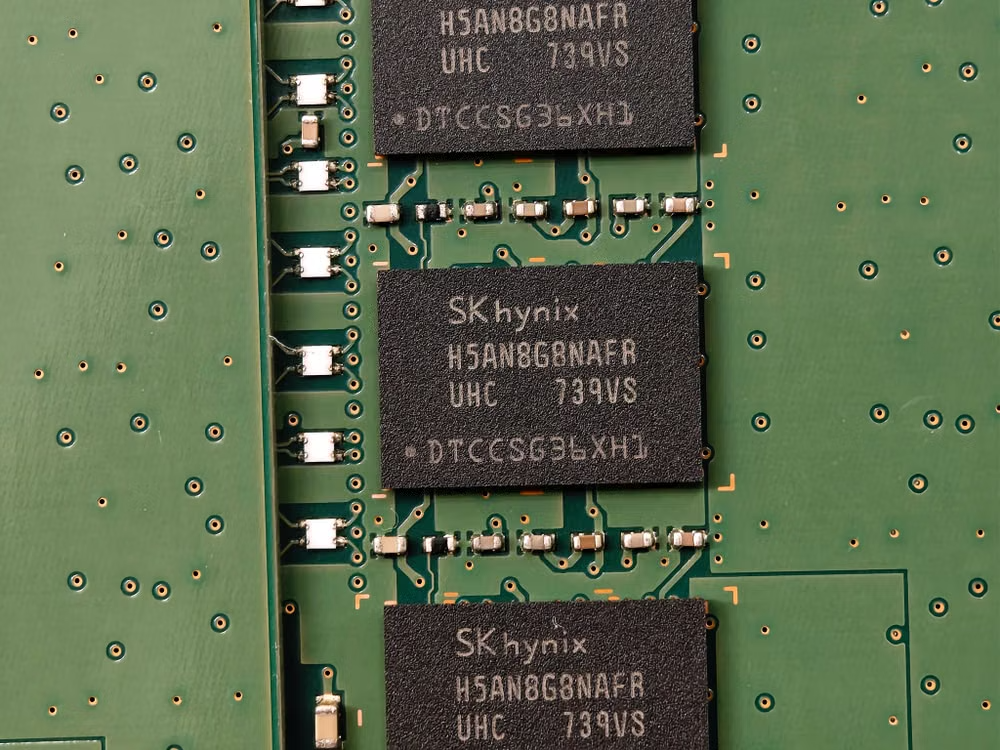
The explosive growth of AI data centers is creating enormous demand for advanced memory, including DRAM and NAND storage. At the same time, semiconductor manufacturers are shifting production toward higher-value components designed for AI infrastructure. The result is a tightening memory market that could eventually affect everything from smartphones and laptops to tablets, gaming devices and other consumer electronics. Recent industry analysis indicates that AI-driven memory demand is already pushing costs higher and creating pressure throughout the consumer technology supply chain.
For American consumers, the question is no longer simply whether AI will change technology. The more immediate question may be: How much will AI change the price of the technology sitting in your pocket, backpack or living room?
AI Data Centers Are Changing the Memory Market
Modern AI systems require enormous amounts of computing power, but processing power is only part of the story. AI servers also need huge quantities of high-performance memory to move and process data efficiently.
That demand has transformed memory from a relatively ordinary component into a strategic resource.
Traditional consumer devices use memory in familiar ways. A smartphone needs RAM to keep applications running, while NAND flash provides internal storage for photos, videos, applications and operating-system files. A laptop relies on similar technologies for everyday computing.
AI data centers operate on a completely different scale.
As technology companies continue investing billions of dollars in AI infrastructure, memory manufacturers have strong incentives to prioritize products that serve data centers. Industry analysts have warned that this shift is contributing to an unusual imbalance between AI-related demand and conventional consumer demand.
This matters because semiconductor manufacturing capacity cannot be redirected overnight.
Building a new fabrication facility can take years, while increasing production of advanced memory requires significant investment, specialized equipment and lengthy qualification processes. Even when manufacturers announce new capacity, consumers may have to wait before additional supply reaches the market.
Why Your Smartphone Could Feel the Pressure
A smartphone may look like a tiny piece of technology, but its memory requirements are becoming increasingly sophisticated.
Today’s phones run demanding cameras, games, navigation systems, streaming services, productivity applications and increasingly powerful AI features. On-device AI can perform tasks such as image enhancement, translation, voice processing and personalized recommendations without sending every piece of information to a remote server.
All of those capabilities can increase memory requirements.
If memory becomes significantly more expensive, smartphone manufacturers have several choices. They can absorb the higher cost and accept lower margins, reduce specifications, redesign devices, or pass some of the additional expense on to customers.
Recent market analysis has already warned that rising memory costs could weigh on smartphone and PC pricing.
That could create an unusual situation for American shoppers. Instead of getting dramatically more hardware for roughly the same price every year, consumers may begin seeing manufacturers emphasize software improvements while keeping hardware upgrades more selective.
In other words, the next major smartphone upgrade may not necessarily be cheaper simply because the technology has become more mature.
The Hidden Cost Inside Your Laptop
The impact could be even more noticeable in the PC market.
Laptops increasingly rely on higher memory capacities because modern operating systems, browsers, creative applications and AI tools can consume significant amounts of RAM. AI-focused laptops may also require additional memory to run certain workloads locally.
At the same time, laptop manufacturers are competing for the same broader memory supply that is being pulled toward data centers.
That creates a difficult balancing act.
A laptop company wants to offer an attractive configuration with plenty of RAM and storage. But if those components become more expensive, the company must decide whether to raise the retail price or make compromises elsewhere.
Some manufacturers may respond by creating more tiers of products. A base model could offer less memory at a lower starting price, while premium configurations become considerably more expensive.
For consumers, that could make the phrase “starting at” increasingly important.
The headline price of a new laptop might remain attractive, while the configuration many buyers actually want costs much more.
Recent reporting has described this broader phenomenon as “chipflation,” with rising memory costs adding pressure to computers and other electronics.
Tablets and Gaming Devices Are Not Immune
Smartphones and PCs receive most of the attention, but the consequences could spread across the wider consumer electronics market.
Tablets, handheld gaming devices, smart displays and other connected products also require memory. As manufacturers compete for limited components, products with relatively low margins could face particularly difficult decisions.
Tablets are a good example.
Consumers generally expect a tablet to offer enough RAM for multitasking and enough storage for applications, downloads and media. But tablets are often sold at highly competitive prices. A significant increase in component costs can therefore have an outsized effect on manufacturers.
Recent shipment data has shown weakness in the global tablet market amid higher memory costs and changing consumer demand.
Gaming hardware faces a similar challenge. Modern games are becoming larger and more demanding, while gamers increasingly expect fast loading times, high-resolution graphics and responsive multitasking.
The irony is striking: AI is helping accelerate the development of more powerful technology while simultaneously making some of the components needed for that technology more expensive.
What About Consumer Electronics Batteries?
Memory is not the only component consumers should watch.
As devices become more capable, power consumption also becomes an important consideration. More powerful processors, brighter displays, always-on connectivity and on-device AI can place additional demands on a device’s power system.
That makes the relationship between memory, processors and battery technology increasingly important.
For manufacturers, improving efficiency can sometimes be as valuable as increasing raw performance. A more efficient chip can reduce energy consumption and help extend runtime even when a device is performing sophisticated tasks.
This is where the consumer electronics battery becomes an important part of the broader technology story.
A smartphone with advanced AI features may require more computing resources, but consumers still expect all-day battery life. A laptop designed for AI workloads must balance performance with portability. Wireless accessories, smart home devices and wearables face similar challenges.
The technology industry therefore has two connected goals: making devices smarter while keeping them efficient enough to remain practical.
The memory crisis could reinforce that trend. If manufacturers face rising costs for memory and other components, improving software and hardware efficiency may become one way to deliver better user experiences without endlessly increasing physical specifications.
Could Devices Become More Expensive?
This is the question American consumers are likely to notice first.
Analysts have warned that higher memory costs could eventually feed into retail prices. One recent Axios analysis noted that Morgan Stanley has estimated potential price increases of up to 15 percentage points for PCs and smartphones under certain conditions.
That does not mean every phone or laptop will suddenly become 15% more expensive.
Manufacturers have different supply contracts, inventories, margins and pricing strategies. Large companies may also have greater purchasing power than smaller competitors.
Still, the direction is important.
For decades, falling memory costs helped manufacturers put more storage and computing power into consumer devices. If that trend reverses for an extended period, the entire pricing strategy of consumer electronics could change.
Instead of constantly adding specifications, companies may become more selective about where they spend their hardware budget.
That could mean better AI processors but less dramatic storage increases. It could mean premium models receiving the latest memory technology while entry-level devices remain relatively conservative.
The Supply Chain Has Become a Bigger Story
There is another reason the memory shortage matters in the United States: supply-chain strategy.
Memory chips are manufactured through a highly international network involving companies, fabrication plants, equipment suppliers and materials providers across multiple countries.
As AI increases demand, governments and technology companies are paying closer attention to where critical semiconductor components come from.
The United States is particularly focused on strengthening domestic semiconductor manufacturing and reducing strategic dependence on overseas supply chains. At the same time, recent reporting indicates that Washington is pressuring major American technology companies to reconsider sourcing memory components from certain Chinese manufacturers.
This creates a complicated environment.
The cheapest component is not always the easiest component to obtain. Companies must consider tariffs, export restrictions, national-security concerns, manufacturing capacity and long-term supply agreements.
For consumers, these complicated decisions eventually show up in something much simpler: the price tag on a device.
Will More Chip Factories Solve the Problem?
Eventually, additional manufacturing capacity should help.
But the timeline is the problem.
Memory production is capital-intensive, and advanced facilities cannot be created quickly. Even after new factories are constructed, manufacturers need time to install equipment, qualify production processes and reach efficient yields.
That means today’s shortage cannot necessarily be solved by tomorrow’s investment.
TechInsights has argued that the current memory imbalance differs from traditional memory cycles because AI data centers have fundamentally changed the demand equation.
This is an important distinction.
In a conventional cycle, higher prices eventually reduce demand and encourage manufacturers to increase production. The market then moves toward balance.
AI could make that process slower because major technology companies may be willing to spend heavily on infrastructure even when component prices rise.
For an AI company building a massive data center, paying more for memory may still make economic sense if the resulting computing capacity can generate significant revenue.
A typical smartphone buyer, however, may think very differently about paying an extra $100 for a device.
What American Consumers Should Watch
The memory crisis does not mean Americans should rush out and buy every electronic device before prices rise.
Instead, consumers should pay attention to specifications and value.
If a laptop already includes sufficient RAM and storage for several years of use, buying a more expensive configuration may not always be necessary. Likewise, smartphone buyers should consider whether they actually need the highest storage tier or whether a less expensive model will meet their needs.
Longer device lifecycles could also become more attractive.
If hardware prices rise, keeping a reliable phone or laptop for an extra year may become more financially appealing. Software support, repairability, battery health and storage capacity could therefore become more important factors in purchasing decisions.
The idea of upgrading every year may gradually become less compelling if hardware improvements slow while prices rise.
The Bigger Question: Who Gets the Memory?
At the heart of this story is a surprisingly simple question: Who gets access to the world’s limited memory supply?
AI companies want more memory for increasingly powerful data centers.
PC manufacturers need memory for laptops and desktops.
Smartphone companies need it for increasingly intelligent mobile devices.
Gaming companies want it for consoles and handheld systems.
And consumers want all of those products to remain affordable.
The technology industry is now trying to satisfy all of these demands simultaneously.
That is why the memory shortage is more than another semiconductor-industry story. It is a test of how the AI boom will affect everyday life.
For years, artificial intelligence felt like something happening inside cloud servers and research laboratories. Now its influence is reaching directly into the components inside ordinary consumer devices.
The Next Era of Consumer Technology May Look Different
The memory crisis could ultimately reshape what Americans expect from electronics.
The future may not simply be about adding more RAM, more storage or faster processors every year. Instead, manufacturers may focus more heavily on efficiency, specialized AI hardware, software optimization and longer product lifecycles.
That could produce better devices—but not necessarily cheaper ones.
And there is an important connection between all of these trends. As smartphones, laptops, wearables and smart-home products become more intelligent, manufacturers must carefully balance memory, processing power, energy consumption and physical size. The role of the consumer electronics battery may therefore become just as important as the processor or memory chip when companies design the next generation of devices.
For consumers, the most important change may be psychological.
The era when technology automatically became cheaper and more powerful at the same time may be coming under pressure.
AI has created extraordinary demand for computing infrastructure, and that demand is now competing with the devices people use every day. If memory remains expensive, the effects could appear in places consumers do not immediately expect—from laptop configurations to smartphone prices and even the design priorities of future gadgets.
Ultimately, the consumer electronics battery and the memory chip represent two sides of the same challenge: making increasingly powerful technology practical for everyday life.
The AI revolution may be happening in giant data centers, but its bill could eventually arrive on a much smaller screen—the one in your hand.
