
A New Chapter Begins at Apple
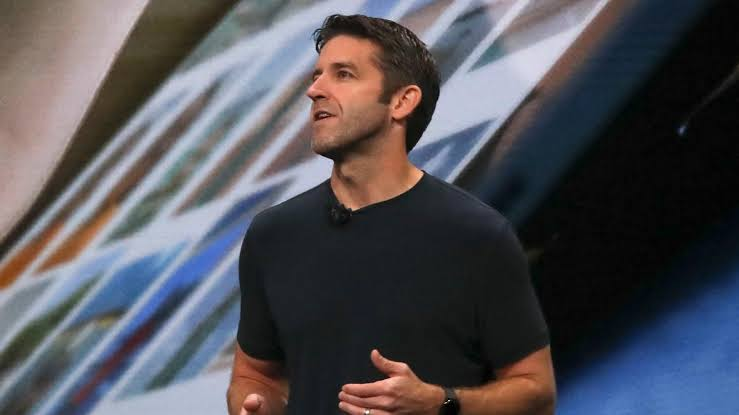
For more than a decade, Apple has been closely associated with one name: Tim Cook. That era officially came to an end on September 1, 2026, when John Ternus took over as the company’s new chief executive officer. Now, just days into his new job, Ternus is facing one of the biggest moments of his career: introducing Apple’s latest generation of products to the world.
The timing could hardly be more important.
Apple is expected to unveil its newest iPhone lineup at an event in Cupertino, California, with the possibility of the company finally entering the foldable smartphone market. The move would represent a major shift for a company that has traditionally waited until emerging technologies mature before putting its own spin on them. Samsung, Google and other manufacturers have already spent years experimenting with foldable phones, while Apple has largely stayed on the sidelines.
For Ternus, however, this is not simply another annual product launch. It is his first opportunity to show consumers, investors and Apple employees what the post-Cook era will look like.
And the pressure is enormous.
Why John Ternus Is Different From Tim Cook
John Ternus is not a traditional outsider brought in to shake up Apple. He has spent years inside the company and played a major role in the development of its hardware strategy. Before becoming CEO, he served as Apple’s senior vice president of hardware engineering and worked on major products including the iPhone, iPad, Apple Watch, AirPods and Vision Pro.
That background tells investors something important about Apple’s strategy.
Rather than abandoning the company’s hardware-first identity, Ternus appears positioned to strengthen it while pushing Apple deeper into artificial intelligence. Analysts have pointed to his engineering background as one reason the company selected him to lead Apple at a time when technology is undergoing another major transformation.
The challenge is that hardware alone may no longer be enough.
The smartphone market is increasingly defined by AI assistants, on-device intelligence, personalized software and connected services. Consumers are no longer asking only how fast a phone is or how good its camera looks. They want to know what the device can actually do for them.
That makes Ternus’s first major launch a test of more than industrial design.
It is a test of Apple’s ability to define the next generation of personal technology.
The Foldable iPhone Could Change Everything
The most dramatic potential announcement is a foldable iPhone.
Apple has watched competitors experiment with foldable devices since the category emerged several years ago. Some models have focused on large tablet-like displays, while others have attempted to make traditional smartphones smaller and more portable.
Apple’s strategy appears to be different: wait, watch and refine.
That approach is extremely Apple-like. Instead of being the first company into a new category, Apple often waits until it believes the technology is ready for mass-market consumers. The company then tries to solve the problems that prevented earlier products from becoming mainstream.
In the case of foldable phones, those problems include durability, hinge reliability, screen creases, thickness and price.
Reports suggest Apple’s expected foldable iPhone could carry a premium price of more than $2,500. That would make it one of the most expensive mainstream smartphones ever introduced. Yet analysts believe Apple’s brand power could help create significant demand even at such a high price.
The real question is not whether Apple can build a foldable phone.
It is whether Apple can convince millions of American consumers that they actually need one.
The Battery Question Consumers Will Care About
A foldable display creates an immediate challenge that goes beyond design: power consumption.
Consumers already expect their smartphones to last throughout a busy day. They use phones for navigation, video streaming, social media, gaming, photography, work, messaging and increasingly AI-powered tasks.
A larger flexible display could make those demands even greater.
That is why the conversation around the next generation of iPhones will inevitably include battery life. Consumers may be willing to pay for a revolutionary new screen, but they are unlikely to tolerate a device that constantly needs to be charged.
For many buyers, the iPhone battery remains one of the most practical parts of the ownership experience. A spectacular camera or advanced AI assistant means little when the phone reaches 10% before dinner.
The challenge becomes even more complicated when AI enters the picture. More intelligent assistants, real-time image processing, language models and advanced photography features can require significant computing resources.
Apple therefore needs to balance three competing goals: thinner hardware, more powerful processing and longer battery life.
That balance could become one of the defining engineering challenges of the Ternus era.
Siri Is Just as Important as the Hardware
While the foldable iPhone may dominate headlines, Siri could be even more important to Apple’s long-term strategy.
Apple has been working on a major overhaul of Siri as competition in generative AI accelerates. Google, OpenAI and other technology companies have moved quickly to develop AI assistants that can understand context, perform multiple tasks and interact more naturally with users.
Apple cannot afford to let Siri become the digital equivalent of yesterday’s technology.
The company has reportedly been working on a new Siri architecture and has explored outside AI technology as part of its effort to improve the assistant. Reuters reported that Apple’s AI strategy may involve Google technology behind the scenes, while regulatory restrictions could affect when some Siri capabilities become available in different markets.
For Ternus, that creates an unusual situation.
He is an engineering-focused CEO leading a company whose biggest competitive battle increasingly involves software and artificial intelligence.
The next Siri therefore needs to feel less like a voice-controlled search box and more like a genuinely useful personal assistant.
Imagine asking Siri to summarize your unread messages, identify an important appointment, prepare a shopping list and remind you about a flight without manually opening several different apps.
That is the kind of experience consumers increasingly expect.
AI Could Become the Real Reason to Upgrade
For years, consumers upgraded smartphones because of better cameras, faster processors or new displays.
That model may be changing.
The next major reason to buy a new phone could be AI.
Apple already promotes its devices around Apple Intelligence, and its latest hardware is designed to support increasingly sophisticated AI features.
But there is a major difference between having AI features and making AI indispensable.
If consumers can use the same AI tools on a three-year-old phone, there may be little reason to purchase a new device. Apple therefore needs to demonstrate why newer hardware provides a substantially better AI experience.
That could mean faster on-device processing, better privacy, more advanced assistants and smarter integration across the Apple ecosystem.
In other words, the next iPhone needs to feel less like a better phone and more like a better computer.
That could become the foundation of Apple’s next decade.
The Rising Cost Problem
There is another challenge waiting for Ternus: price.
Global demand for AI infrastructure has created enormous pressure across the semiconductor supply chain. Memory chips and other components are increasingly valuable as technology companies build larger AI systems.
That pressure could eventually reach consumers.
Recent reports suggest the next iPhone generation may become more expensive partly because of rising memory costs. The previous iPhone generation ranged from hundreds of dollars for entry models to nearly $2,000 for premium configurations, meaning Apple is already operating across a wide price spectrum.
A foldable iPhone could push that ceiling even higher.
That raises a difficult question for Apple.
How much will consumers pay for innovation?
Apple has historically demonstrated that customers will pay premium prices when a product offers a compelling combination of design, ecosystem integration and convenience. But the smartphone market is also more mature than it was a decade ago.
Consumers are holding onto devices longer.
Trade-in programs are becoming more important.
And competition from Samsung, Google and other manufacturers remains intense.
Ternus will need to persuade customers that upgrading is worth the money.
What About Existing iPhone Owners?
The transition to a new Apple era does not automatically mean that everyone needs a new device.
In fact, millions of existing iPhone users may be more interested in software improvements than completely new hardware.
For these users, everyday concerns remain surprisingly simple. Is the phone fast enough? Does it receive software updates? Does the camera still perform well? Can it make it through the day without charging?
The iPhone battery is particularly important for people who intend to keep their phones for several years. Battery capacity naturally becomes a bigger concern as a device ages, and long-term users often judge the value of an upgrade by how much better the entire daily experience feels.
That is why Apple’s challenge is not simply to build exciting new products.
It must also make existing customers feel that the Apple ecosystem continues to improve.
Ternus Has to Think Beyond the iPhone
Perhaps the most interesting part of Ternus’s new role is that Apple cannot depend on the iPhone forever.
The iPhone remains the center of Apple’s consumer ecosystem, but technology is moving toward a world where smartphones may no longer be the only primary interface between people and computers.
Wearable devices, smart glasses, AI assistants, spatial computing and ambient technology could eventually play a much larger role.
Apple already has products such as the Apple Watch, AirPods and Vision Pro, giving Ternus a broad hardware portfolio to develop. His background across these product categories could become a significant advantage as Apple explores what comes after the traditional smartphone.
The ultimate goal may not be to make the iPhone more important.
It may be to make the entire Apple ecosystem more intelligent.
In that future, the phone could act as the central computing hub while watches, earbuds, glasses and other devices interact with it seamlessly.
That would represent a much bigger transformation than simply adding another camera or making the screen brighter.
The First Ternus Era Product Launch
This is why the latest Apple event matters so much.
It is easy to view a product launch as a collection of specifications: screen size, processor speed, camera resolution, battery capacity and price.
But Apple’s current situation is much bigger.
John Ternus is inheriting one of the world’s most valuable technology companies after Tim Cook’s 15-year tenure. Cook’s leadership turned the iPhone into an enormous global business and helped Apple reach a valuation measured in trillions of dollars.
Now Ternus must demonstrate that Apple can create its next growth engine.
A foldable iPhone could be part of that answer.
A smarter Siri could be another.
AI-powered hardware, new wearables and future computing platforms could eventually complete the picture.
For consumers, the most exciting part is that these technologies are beginning to collide.
The phone is becoming an AI device.
The AI assistant is becoming more personal.
The display is becoming more flexible.
And the devices around us are becoming more connected.
What Apple’s Future Could Look Like
The success of John Ternus will not be determined by one keynote or one iPhone model.
But his first major product launch will establish the tone.
If Apple delivers a compelling foldable phone, a genuinely useful AI experience and meaningful improvements to its existing lineup, Ternus could quickly establish himself as more than the engineer who followed Tim Cook.
He could become the leader who guided Apple into its next technological era.
That era will probably be defined by a combination of hardware and AI rather than either one alone.
The best products will not simply have faster processors or thinner designs. They will understand what users need, anticipate tasks and work quietly across multiple devices.
And even as Apple pushes toward that future, some of the most important questions will remain remarkably familiar.
How long does the phone last?
How reliable is it?
How much does it cost?
And is it actually better than the device already sitting in your pocket?
Those questions will matter whether Apple introduces a foldable iPhone, a smarter Siri or an entirely new category of hardware.
For consumers thinking about upgrading, the iPhone battery may still be a simple but revealing measure of how far technology has really come.
John Ternus now has the opportunity to prove that Apple’s next chapter is not simply about making the iPhone more advanced.
It is about making personal technology feel fundamentally different.
And if Apple can pull that off, September 2026 could eventually be remembered as the moment the Ternus era truly began.
