
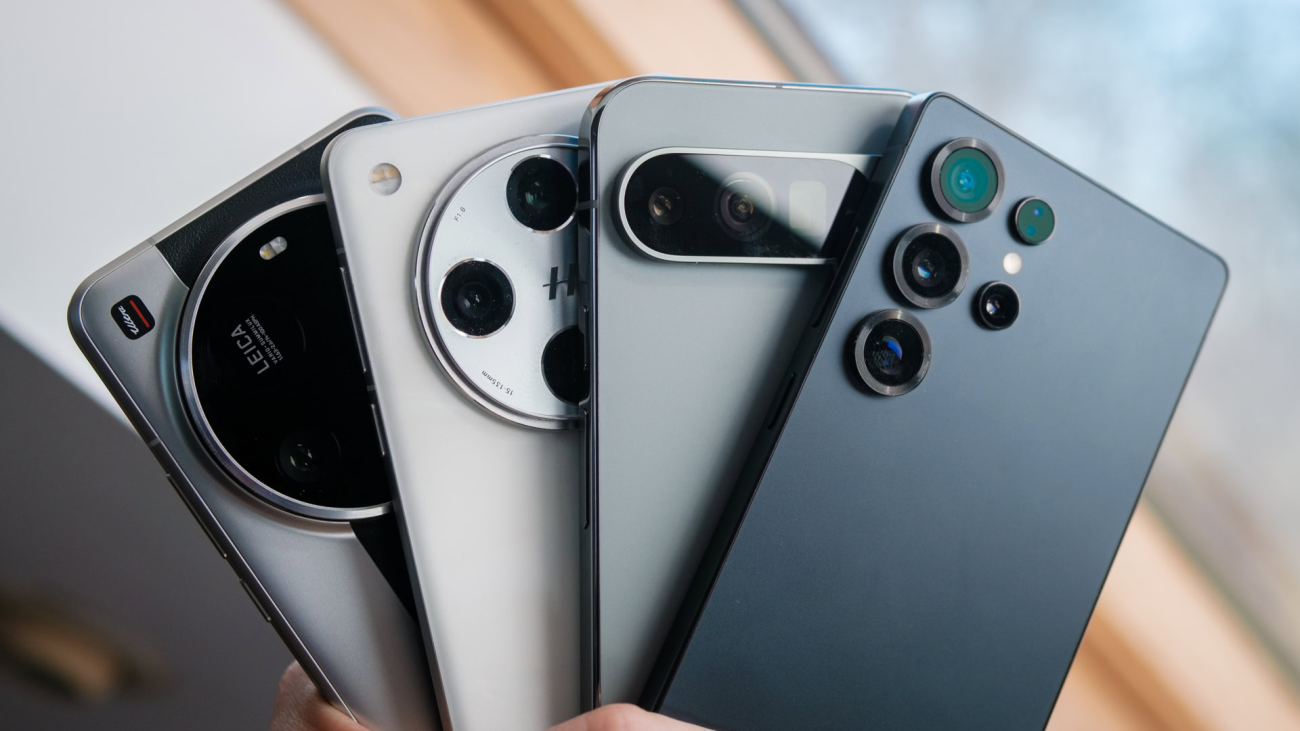
Smartphone photography has entered a new phase in 2026. For years, phone manufacturers competed by adding more megapixels, more cameras and increasingly powerful image-processing software. Now, the battle is becoming more sophisticated. Major imaging names such as Leica and ZEISS are bringing decades of optical expertise into smartphone development, while Sony is using technology and shooting concepts from its Alpha camera system to make its Xperia phones feel more like dedicated cameras.
For American consumers, this shift matters because the smartphone has become the camera that is always in a pocket. Travelers, creators, small-business owners, parents and photography enthusiasts increasingly expect a phone to capture high-quality images without requiring a separate camera bag.
Recent products and technology developments show how quickly this category is changing. Leica continues its smartphone collaboration with Xiaomi, while ZEISS works with vivo on premium mobile imaging. Sony, meanwhile, continues to connect its Xperia smartphone experience with its Alpha camera expertise.
Leica Brings Its Optical Heritage Into Mobile Photography
Leica has one of the most recognizable names in photography, so its involvement in smartphones naturally attracts attention from enthusiasts. The company has worked with Xiaomi on mobile camera systems since 2022, combining Leica’s optical and imaging knowledge with Xiaomi’s smartphone engineering.
The collaboration has moved beyond simply placing a famous logo beside a camera module. Xiaomi’s 2026 flagship generation highlights Leica lens design, color tuning and multiple focal lengths as important parts of the imaging experience. The Xiaomi 17 series, for example, emphasizes Leica-developed imaging characteristics and a range of focal lengths designed for different shooting situations.
This is significant because smartphone photography has historically relied heavily on computational photography. Software can combine multiple exposures, recover shadows, sharpen details and improve low-light images. But Leica’s mobile engineering leadership has pointed out that smartphone optics still have considerable room for improvement.
That creates an interesting balance. Better software can make a small sensor perform impressively, but optical design still determines how much useful light and visual information reaches that sensor in the first place.
For American photographers, this means the smartphone camera conversation is becoming less about megapixel numbers and more about the complete imaging system.
ZEISS Makes Smartphone Photography More Optical
ZEISS represents another major approach to premium mobile photography. Its partnership with vivo has focused on integrating optical technology, coatings and portrait characteristics associated with ZEISS imaging into high-end smartphones.
According to ZEISS, its mobile imaging partnership with vivo began with the X series and includes technologies such as ZEISS optics, ZEISS T* coating and portrait effects inspired by the company’s optical heritage.
The importance of lens coatings can be easy to overlook. In real-world photography, unwanted reflections, flare and ghosting can reduce contrast and make an image look less clean. ZEISS’s mobile imaging work specifically addresses these optical issues, while the company and vivo continue developing technologies that combine traditional imaging knowledge with smartphone software.
This approach is especially relevant to people who shoot outdoors. A sunset, bright streetlight or strong window can challenge any camera system. Instead of relying entirely on software to repair an image after capture, better optical engineering can help control the problem before the image reaches the sensor.
The result is a broader definition of what makes a smartphone camera good. Processing speed matters, but so do lenses, coatings, sensors, autofocus, color science and the photographer’s ability to control the final image.
Sony Alpha Ideas Move Into Xperia Phones
Sony has a different advantage because the company already operates across both smartphone and dedicated-camera markets.
The Alpha line has become particularly influential among photographers and creators who want manual control, fast autofocus and professional video capabilities. Sony has brought some of that philosophy into Xperia smartphones.
Sony’s own support documentation explains that its Photography Pro experience includes manual controls inspired by Sony Alpha cameras. Depending on the model, users can access features such as autofocus and auto-exposure burst shooting, Real-time Eye AF and RAW DNG output.
This is an important distinction. A smartphone does not need to physically become a mirrorless camera to borrow some of the camera experience.
Instead, the phone can give users greater control over exposure, focus, file formats and shooting behavior while keeping the convenience of a touchscreen device.
Sony’s Xperia 1 VII also illustrates the company’s strategy. Sony said the phone was developed with engineers from its Alpha digital-camera business, along with expertise from its Walkman and BRAVIA divisions. Its camera features include AI Camerawork and Auto Framing for video.
In other words, Sony is treating the smartphone as part of a larger imaging ecosystem rather than as a completely separate product category.
The Smartphone Is Becoming a Pocket Camera System
The most interesting development is not any individual Leica, ZEISS or Sony feature. It is the way smartphone cameras are increasingly being designed as complete systems.
A modern flagship can combine several focal lengths, computational photography, optical stabilization, advanced autofocus, HDR processing, RAW capture and sophisticated video tools. That combination makes it possible to take photographs that would have required considerably more equipment only a few years ago.
For a traveler in New York, a creator filming in Los Angeles or a small-business owner documenting products for social media, carrying a phone can be much easier than carrying a dedicated camera.
That convenience changes user behavior.
A person may be willing to learn manual photography settings on a smartphone because the device is already part of their daily life. They can take a photo, edit it, publish it and send it to a client without transferring files between multiple devices.
This workflow is particularly attractive to younger creators who grew up with mobile photography rather than traditional cameras.
Better Cameras Also Mean Greater Power Demands
There is another part of the smartphone camera revolution that receives less attention: energy consumption.
Advanced camera sensors, high-resolution video recording, computational photography and real-time image processing all require significant processing power. Recording long 4K or high-frame-rate video can be particularly demanding because the processor, display, storage and camera system may all be working simultaneously.
That makes the smartphone battery an increasingly important part of the photography experience.
A phone with an impressive camera is less useful if intensive shooting quickly drains its power. This is especially noticeable during travel, concerts, sporting events and outdoor shoots, where users may spend hours taking photographs or recording video without easy access to a charger.
The issue goes beyond capacity. Battery efficiency, thermal management and charging speed all affect how practical a camera-focused smartphone becomes.
When photographers use demanding camera modes, the smartphone battery has to support not only image capture but also autofocus calculations, image processing, screen brightness, wireless connectivity and storage operations.
This explains why battery performance is becoming closely connected to the overall smartphone photography experience.
Why American Consumers Are Watching This Trend
The U.S. smartphone market is highly competitive, and consumers increasingly expect premium phones to handle multiple roles.
A flagship smartphone can serve as a communication device, gaming machine, navigation tool, streaming screen, mobile workstation and camera. The camera is therefore no longer a secondary feature.
For creators, the advantages are obvious. A smartphone can be mounted on a tripod, connected to accessories, used with wireless microphones and immediately upload footage to social platforms. For business users, it can replace a basic product-photo setup. For travelers, it eliminates the need to carry another device for everyday photography.
At the same time, dedicated cameras remain important. A full-frame mirrorless camera can offer a larger sensor, interchangeable lenses, greater physical controls and a broader range of professional accessories. Smartphone cameras still operate within physical limits involving sensor size, lens dimensions and thermal constraints.
The competition is therefore not simply about replacing cameras. It is about making the smartphone capable enough that consumers do not always need one.
Computational Photography Meets Traditional Camera Expertise
The next stage of mobile photography will likely come from combining two worlds.
Leica and ZEISS contribute optical knowledge and imaging heritage. Sony can draw on its Alpha camera technology and its experience in professional photography and video. Smartphone manufacturers contribute processors, software, displays, connectivity and compact industrial design.
The result is a hybrid approach.
A photographer can benefit from optical engineering while relying on software to handle complicated calculations. A phone can reproduce certain professional-style controls while remaining simple enough for casual users. Automatic modes can coexist with manual settings.
This flexibility is important because smartphone users are not one homogeneous group.
One person may want to point the phone at a child and instantly get a sharp image. Another may want to adjust shutter speed and ISO manually. A third may care primarily about video stabilization. A fourth may want RAW files for editing later.
The best mobile camera systems increasingly attempt to accommodate all four.
What Comes Next for Smartphone Cameras
The next major advances may not come from simply increasing camera resolution.
Instead, manufacturers are likely to focus on better optics, larger or more efficient sensors, improved telephoto systems, faster autofocus, more natural computational processing and stronger video capabilities.
Leica’s continued emphasis on optics is particularly interesting because it challenges the assumption that software alone can solve every imaging problem.
ZEISS’s continued work with vivo similarly demonstrates how traditional optical engineering can remain relevant in a smartphone environment.
Sony’s Alpha-inspired approach shows another direction: giving smartphone photographers more control without forcing them to carry a conventional camera.
Battery technology will also remain part of the equation. As camera systems become more powerful, users will expect phones to sustain longer recording sessions without excessive heat or rapid power loss. A capable smartphone battery is therefore becoming an essential component of the mobile photography experience rather than a background specification.
The Camera in Your Pocket Is Getting More Serious
The smartphone camera has come a long way from being a convenient replacement for a basic point-and-shoot.
Leica is bringing its optical philosophy to Xiaomi’s premium phones. ZEISS is applying its imaging expertise to vivo’s flagship devices. Sony is connecting Xperia photography with ideas developed through its Alpha camera business. Together, these approaches demonstrate how the boundaries between smartphones and traditional cameras are becoming increasingly interesting.
For American consumers, the biggest change may be psychological as much as technical. People are increasingly looking at their phones not merely as communication devices with cameras attached, but as serious creative tools.
The dedicated camera is not disappearing. Instead, smartphones are becoming capable enough to handle a growing share of everyday photography and video production.
And as optical engineering, computational photography, professional controls and battery technology continue to develop together, the camera in your pocket is becoming a much more serious piece of photographic equipment.
