
The Action Camera Market Is Entering a New Era
Action cameras are no longer just gadgets for professional athletes and extreme-sports enthusiasts. Across the United States, they have become valuable tools for travel vloggers, motorcycle riders, mountain bikers, family adventurers, outdoor photographers, and social media creators who want to capture experiences from perspectives that ordinary smartphones cannot easily deliver.
The competition is changing quickly. DJI and Insta360 have expanded their presence in the handheld camera market, while GoPro, once the defining name in action cameras, faces increasing pressure to keep pace with more aggressive competitors. The battle is no longer simply about which device can survive the toughest conditions. Image quality, editing convenience, portability, durability, and operating time are becoming equally important.
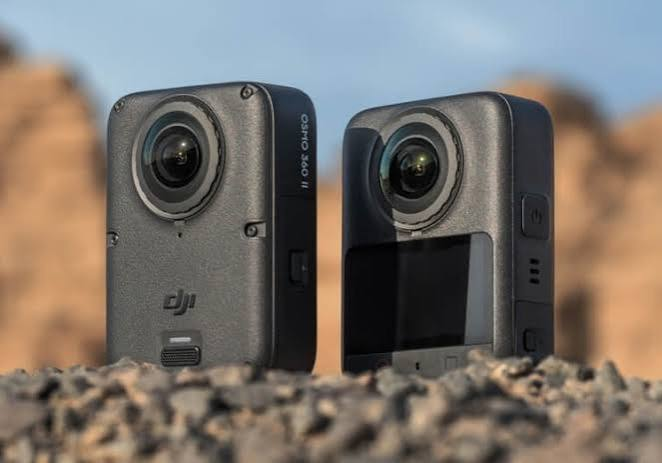
Against this backdrop, the DJI Osmo 360 II has emerged as an interesting development in the panoramic camera category. Announced for the global market in September 2026, the device brings 8K recording at up to 60 frames per second, improved low-light processing, and replaceable lenses into a compact camera designed for immersive content creation.
For American consumers, the bigger question is whether this new generation of 360-degree cameras offers enough practical advantages to justify investing in a specialized device instead of relying on a smartphone or a traditional action camera.
Why 360-Degree Cameras Are Attracting More Creators
Traditional cameras require users to decide where to point the lens before pressing the record button. That approach works well for carefully planned shots, but it can become frustrating when something unexpected happens.
Imagine riding a mountain trail in Colorado, exploring a national park in Utah, or cruising along California’s Pacific Coast Highway. The scenery changes constantly, and interesting moments can happen behind or beside the camera just as easily as in front of it.
A 360-degree camera captures a much broader view of the surroundings, allowing creators to select the desired angle during editing. Instead of recording a single fixed perspective, they can produce several different shots from the same recording.
This flexibility is especially useful for solo creators who cannot bring a camera operator on every trip. A rider can concentrate on the road while a properly secured camera records the surrounding scenery. A travel vlogger can capture both a personal reaction and the landscape without constantly repositioning the equipment.
For social media users, the ability to crop a panoramic recording into vertical, square, or widescreen clips is another advantage. One recording can support several formats, reducing the need to repeat a shot for different platforms.
However, 360-degree recording also creates larger files and more demanding editing workflows. Storage capacity, processing performance, and sustained power consumption therefore matter just as much as headline resolution.
DJI Osmo 360 II Raises the Bar for Panoramic Video
The Osmo 360 II combines high-resolution panoramic recording with several features intended to make creative shooting more practical.
According to DJI, the camera supports native 8K recording at 60 frames per second, HDR imaging, and AI SuperNight 2.0 processing for improved low-light footage. It also includes 105GB of built-in storage, a four-microphone array, and intelligent subject-following features.
These capabilities address common frustrations experienced by action-camera users. High-resolution recording gives editors more flexibility when reframing footage, while improved low-light processing can help when shooting in city streets, at campsites, or during evening adventures.
The replaceable-lens design is another notable development. Panoramic cameras often use exposed, curved lenses that can be vulnerable to scratches and impacts. A damaged lens can be particularly frustrating when the camera is otherwise functioning normally.
With replaceable lenses, owners have a potential route to repairing the optical component rather than immediately replacing the entire device. That does not eliminate repair costs or the need for careful handling, but it could improve the long-term value of the camera.
The Osmo 360 II is therefore interesting not only because of its recording specifications, but also because of its approach to durability and maintenance.
DJI vs. GoPro vs. Insta360: What Should Buyers Compare?
The American action-camera market offers several distinct approaches to capturing outdoor experiences.
DJI has developed a broad imaging ecosystem that includes panoramic cameras, conventional action cameras, handheld gimbals, microphones, and drones. This can appeal to creators who want to combine several tools into a single workflow.
Insta360 has built its reputation around 360-degree imaging and flexible reframing. Its products appeal to travelers, athletes, and creators who value creative freedom and specialized shooting modes.
GoPro remains a recognizable name for rugged action cameras and accessories. Its established product ecosystem and familiar shooting experience continue to matter to users who prioritize straightforward recording in demanding environments.
The right choice depends on the type of content a buyer intends to create.
For motorcycle footage, a panoramic camera can capture a more immersive view of the ride. For surfing or mountain biking, a conventional action camera may be preferable when a compact, forward-facing perspective is all that is needed. For travel videos, 360-degree recording can provide more opportunities to create different compositions from a single take.
Buyers should also compare stabilization, microphone compatibility, waterproofing, mounting accessories, software support, and the total cost of ownership. A camera that looks affordable initially may become more expensive after adding mounts, protective accessories, storage solutions, and spare power supplies.
Availability is another consideration for American shoppers. Although DJI announced the Osmo 360 II for the global market, buyers should verify official U.S. sales channels, warranty coverage, regional support, and applicable restrictions before purchasing.
Why Battery Life Matters More Than Ever
High-resolution video creates an obvious challenge: the more demanding the recording mode, the more carefully users must manage their available power.
For outdoor creators, a short recording window can mean missing a spectacular sunset, the final section of a mountain-bike ride, or an unexpected moment during a family trip. A camera battery is therefore not merely an accessory. It is part of the complete recording system, affecting how confidently users can plan longer shoots.
DJI states that the Osmo 360 II can record continuously for up to 100 minutes at 8K and 30 frames per second under specified laboratory conditions. The company also advertises fast charging to 80% in 22 minutes and an extension rod accessory that can add substantial operating time.
These figures provide a useful starting point, but buyers should understand how testing conditions differ from everyday use. Actual runtime depends on recording resolution, frame rate, screen activity, wireless connections, environmental temperature, and other settings.
Recording at 8K and 60 frames per second is not the same workload as recording at a lower resolution with power-saving features enabled. Long outdoor sessions can also expose cameras to temperatures that affect battery performance.
The practical lesson is simple: users should plan around their expected recording mode rather than relying exclusively on a maximum runtime figure.
The Hidden Cost of High-Resolution Recording
Video resolution is only one part of the equation. Recording at 8K can create large files that demand more storage space, faster transfers, and more capable editing hardware.
Although the Osmo 360 II includes 105GB of internal storage, users who regularly shoot long trips may still need a workflow for transferring and backing up their footage. Running out of storage halfway through a day can be just as disruptive as running out of power.
Editing is another consideration. Panoramic recordings may require reframing, stabilization adjustments, color correction, and exports into multiple aspect ratios. A computer that handles ordinary video comfortably may struggle with a large collection of high-resolution 360-degree files.
American creators should consider the complete cost of ownership before purchasing. This includes not only the camera, but also editing software, computer performance, storage drives, mounting accessories, and charging equipment.
A more expensive camera can be a sensible investment for someone who publishes frequently. For casual travelers who record a few short clips each month, a less specialized device may offer better value.
How to Build a Reliable Outdoor Recording Kit
A dependable setup begins with matching the equipment to the activity.
For road trips, travelers should bring secure mounting hardware, a charging cable, and a reliable way to back up important footage. Motorcycle riders should use mounts designed for the relevant conditions and ensure that camera placement does not interfere with safe operation.
Hikers and campers should consider weather protection, temperature conditions, and access to charging opportunities. A compact power bank can be useful when compatible with the camera’s charging requirements, although charging during recording may introduce additional heat.
It is also sensible to carry a spare camera battery when the camera supports interchangeable batteries. Before leaving home, fully charge available batteries, inspect charging contacts, and confirm that the charging accessories are compatible with the device.
For models with built-in batteries, users should instead pay close attention to charging intervals, power-saving settings, and the availability of suitable external charging options.
Creators should also avoid assuming that every waterproof camera can safely be submerged in every situation. Water resistance depends on the device, its covers and seals, and whether additional protection is required for deeper dives or high-pressure water activities.
A little preparation can prevent equipment problems from interrupting an otherwise memorable trip.
Repairability Could Become a Major Buying Factor
Consumers increasingly consider how long a device will remain useful, not simply how impressive it looks on launch day.
Replaceable lenses offer one example of how manufacturers can make specialized electronics easier to maintain. When a vulnerable component can be replaced separately, the cost and inconvenience of damage may be reduced.
The same principle applies to power accessories. A compatible replacement camera battery can help extend the useful life of equipment that supports removable batteries, provided the replacement meets the manufacturer’s specifications and safety requirements.
However, battery replacement is not always straightforward. Some compact cameras use integrated battery designs that require professional service or specialized repair procedures. Users should check the manufacturer’s documentation rather than assuming that a replacement pack can be installed by the owner.
Warranty terms also matter. Unauthorized repairs, incompatible charging accessories, and unsuitable replacement components can create safety issues or affect service coverage.
For buyers who expect to keep their equipment for several years, repair options and accessory availability deserve as much attention as resolution and frame rate.
Is a 360-Degree Camera Worth It for American Consumers?
The answer depends on whether panoramic recording solves a real problem for the user.
Travel vloggers and outdoor enthusiasts may appreciate the ability to capture a scene from every direction and choose the final framing later. Motorcycle riders and cyclists can use panoramic footage to produce immersive videos, while families may enjoy recording vacations without constantly deciding which direction to point the camera.
Professional creators may find the greatest value in the flexibility offered during post-production. A single recording can provide several usable perspectives, potentially saving time during a busy shooting schedule.
On the other hand, buyers who mainly record straightforward clips for social media may not need the complexity of a 360-degree workflow. A conventional action camera or smartphone could be more convenient and less expensive.
The decision should also account for regional availability, warranty support, editing requirements, and the cost of accessories. Consumers in the United States should verify these details before committing to a particular model.
The Future of Action Cameras Is About More Than Resolution
The competition among DJI, Insta360, and GoPro reflects a broader shift in consumer electronics. Manufacturers are moving beyond basic hardware specifications and focusing on how devices fit into real creative workflows.
Higher resolution matters, but so do dependable stabilization, easier editing, durable construction, repairability, and practical operating time. Consumers want equipment that can survive a demanding day outdoors and still make it easy to turn recorded footage into something worth sharing.
The DJI Osmo 360 II illustrates this direction with its high-resolution panoramic recording, low-light processing, replaceable lenses, and integrated storage. Its significance lies in the combination of imaging capabilities and usability improvements rather than any single specification.
For American shoppers, the smartest approach is to compare the complete experience instead of choosing solely by the largest number on a product page. Consider where and how often the camera will be used, how much editing is required, and whether the available accessories and service options fit the budget.
As panoramic cameras continue to evolve, the most successful products will be those that help people capture more meaningful moments with less friction. For adventurers, travelers, and everyday creators, that may ultimately matter more than another specification on the box.
